内容简介
内容简介
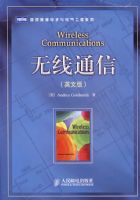
本书重点论述当前各种无线通信系统中具有普遍性和代表性的基本知识,包括基本的理论、技术问题、设计思路和分析方法。全书内容包括无线信道模型、无线信道容量、无线通信中的调制编码技术及均衡处理技术、扩频通信,还包括多天线系统、多用户系统、多载波调制、自适应调制与编码、蜂窝系统及无线自组织网络等。书中每部分内容的讲述都有全新的视角和独特的处理方法,并配有丰富的图示、例题和习题。
本书适合作为通信工程和电子信息类相关专业高年级本科生和研究生的教材,同时也可供工程技术人员参考。
目录
1 Overview of Wireless Communications
1.1 History of Wireless Communications
1.2 Wireless Vision
1.3 Technical Issues
1.4 Current Wireless Systems
1.5 The Wireless Spectrum
1.6 Standards
Problems
References
2 Path Loss and Shadowing
2.1 Radio Wave Propagation
2.2 Transmit and Receive Signal Models
2.3 Free-space Path Loss
2.4 Ray Tracing
2.5 Empirical Path-Loss Models
2.6 Simplified Path-Loss Model
2.7 Shadow Fading
2.8 Combined Path Loss and Shadowing
2.9 Outage Probability under Path Loss and Shadowing
2.10 Cell Coverage Area
Problems
References
3 Statistical Multipath Channel Models
3.1 Time-Varying Channel Impulse Response
3.2 Narrowband Fading Models
3.3 Wideband Fading Models
3.4 Discrete-Time Model
3.5 Space-Time Channel Models
Problems
References
4 Capacity of Wireless Channels
4.1 Capacity in AWGN
4.2 Capacity of Flat Fading Channels
4.3 Capacity of Frequency-Selective Fading Channels
Problems
References
5 Digital Modulation and Detection
5.1 Signal Space Analysis
5.2 Passband Modulation Principles
5.3 Amplitude and Phase Modulation
5.4 Frequency Modulation
5.5 Pulse Shaping
5.6 Symbol Synchronization and Carrier Phase Recovery
Problems
References
6 Performance of Digital Modulation over Wireless Channels
6.1 AWGN Channels
6.2 Alternate Q-Function Representation
6.3 Fading
6.4 Doppler Spread
6.5 Intersymbol Interference
Problems
References
7 Diversity
7.1 Realization of Independent Fading Paths
7.2 Receiver Diversity
7.3 Transmitter Diversity
7.4 Moment Generating Functions in Diversity Analysis
Problems
References
8 Coding for Wireless Channels
8.1 Overview of Code Design
8.2 Linear Block Codes
8.3 Convolutional Codes
8.4 Concatenated Codes
8.5 Turbo Codes
8.6 Low-Density Parity-Check Codes
8.7 Coded Modulation
8.8 Coding with Interleaving for Fading Channels
8.9 Unequal Error Protection Codes
8.10 Joint Source and Channel Coding
Problems
References
9 Adaptive Modulation and Coding
9.1 Adaptive Transmission System
9.2 Adaptive Techniques
9.3 Variable-Rate Variable-Power MQAM
9.4 General M-ary Modulations
9.5 Adaptive Techniques in Combined Fast and Slow Fading
Problems
References
10 Multiple Antennas and Space-Time Communications
10.1 Narrowband MIMO Model
10.2 Parallel Decomposition of the MIMO Channel
10.3 MIMO Channel Capacity
10.3.1 Static Channels
10.3.2 Fading Channels
10.4 MIMO Diversity Gain: Beamforming
10.5 Diversity-Multiplexing Trade-offs
10.6 Space-Time Modulation and Coding
10.6.1 ML Detection and Pairwise Error Probability
10.6.2 Rank and Determinant Criteria
10.6.3 Space-Time Trellis and Block Codes
10.6.4 Spatial Multiplexing and BLAST Architectures
10.7 Frequency-Selective MIMO Channels
10.8 Smart Antennas
Problems
References
11 Equalization
11.1 Equalizer Noise Enhancement
11.2 Equalizer Types
11.3 Folded Spectrum and ISI-Free Transmission
11.4 Linear Equalizers
11.4.1 Zero-Forcing (ZF) Equalizers
11.4.2 Minimum Mean-square Error (MMSE) Equalizers
11.5 Maximum Likelihood Sequence Estimation
11.6 Decision-Feedback Equalization
11.7 Other Equalization Methods
11.8 Adaptive Equalizers: Training and Tracking
Problems
References
12 Multicarrier Modulation
12.1 Data Transmission Using Multiple Carriers
12.2 Multicarrier Modulation with Overlapping Subchannels
12.3 Mitigation of Subcarrier Fading
12.3.1 Coding with Interleaving over Time and Frequency
12.3.2 Frequency Equalization
12.3.3 Precoding
12.3.4 Adaptive Loading
12.4 Discrete Implementation of Multicarrier Modulation
12.4.1 The DFT and Its Properties
12.4.2 The Cyclic Prefix
12.4.3 0rthogonal Frequency-Division Multiplexing (OFDM)
12.4.4 Matrix Representation of OFDM
12.4.5 Vector Coding
12.5 Challenges in Multicarrier Systems
12.5.1 Peak-to-Average Power Ratio
12.5.2 Frequency and Timing Offset
12.6 Case Study: The IEEE 802.11 a Wireless LAN Standard
Problems
References
13 Spread Spectrum
13.1 Spread-Spectrum Principles
13.2 Direct-Sequence Spread Spectrum (DSSS)
13.2.1 DSSS System Model
13.2.2 Spreading Codes for ISI Rejection: Random,Pseudorandom, and m-Sequences
13.2.3 Synchronization
13.2.4 RAKE Receivers
13.3 Frequency-Hopping Spread Spectrum (FHSS)
13.4 Multiuser DSSS Systems
13.4.1 Spreading Codes for Multiuser DSSS
13.4.2 Downlink Channels
13.4.3 Uplink Channels
13.4.4 Multiuser Detection
13.4.5 Multicarrier CDMA
13.5 Multiuser FHSS Systems
Problems
References
14 Multiuser Systems
14.1 Multiuser Channels: The Uplink and Downlink
14.2 Multiple Access
14.2.1 Frequency-Division Multiple Access (FDMA)
14.2.2 Time-Division Multiple Access (TDMA)
14.2.3 Code-Division Multiple Access (CDMA)
14.2.4 Space-Division Multiple Access (SDMA)
14.2.5 Hybrid Techniques
14.3 Random Access
14.3.1 Pure ALOHA
14.3.2 Slotted ALOHA
14.3.3 Carrier-Sense Multiple Access (CSMA)
14.3.4 Scheduling
14.4 Power Control
14.5 Downlink (Broadcast) Channel Capacity
14.5.1 Channel Model
14.5.2 Capacity in AWGN
14.5.3 Common Data
14.5.4 Capacity in Fading
14.5.5 Capacity with Multiple Antennas
14.6 Uplink (Multiple Access) Channel Capacity
14.6.1 Capacity in AWGN
14.6.2 Capacity in Fading
14.6.3 Capacity with Multiple Antennas
14.7 Uplink-Downlink Duality
14.8 Multiuser Diversity
14.9 MIMO Multiuser Systems
Problems
References
15 Cellular Systems and Infrastructure-Based Wireless Networks
15.1 Cellular System Fundamentals
15.2 Channel Reuse
15.3 SIR and User Capacity
15.3.1 0rthogonal Systems (TDMA/FDMA)
15.3.2 Nonorthogonal Systems (CDMA)
15.4 Interference Reduction Techniques
15.5 Dynamic Resource Allocation
15.5.1 Scheduling
15.5.2 Dynamic Channel Assignment
15.5.3 Power Control
15.6 Fundamental Rate Limits
15.6.1 Shannon Capacity of Cellular Systems
15.6.2 Area Spectral Efficiency
Problems
References
16 Ad Hoc Wireless Networks
16.1 Applications
16.1.1 Data Networks
16.1.2 Home Networks
16.1.3 Device Networks
16.1.4 Sensor Networks
16.1.5 Distributed Control Systems
16.2 Design Principles and Challenges
16.3 Protocol Layers
16.3.1 Physical Layer Design
16.3.2 Access Layer Design
16.3.3 Network Layer Design
16.3.4 Transport Layer Design
16.3.5 Application Layer Design
16.4 Cross-Layer Design
16.5 Network Capacity Limits
16.6 Energy-Constrained Networks
16.6.1 Modulation and Coding
16.6.2 MIMO and Cooperative MIMO
16.6.3 Access, Routing, and Sleeping
16.6.4 Cross-Layer Design under Energy Constraints
16.6.5 Capacity per Unit Energy
Problems
References
Appendix A Representation of Bandpass Signals and Channels
Appendix B Probability Theory, Random Variables, and Random Processes
B.1 Probability Theory
B.2 Random Variables
B.3 Random Processes
B.4 Gaussian Processes
Appendix C Matrix Definitions, Operations, and Properties
C.1 Matrices and Vectors
C.2 Matrix and Vector Operations
C.3 Matrix Decompositions
Appendix D Summary of Wireless Standards
D.1 Cellular Phone Standards
D.1.1 First-Generation Analog Systems
D.1.2 Second-Generation Digital Systems
D.1.3 Evolution of Second-Generation Systems
D.1.4 Third-Generation Systems
D.2 Wireless Local Area Networks
D.3 Wireless Short-Distance Networking Standards
Bibliography
Index