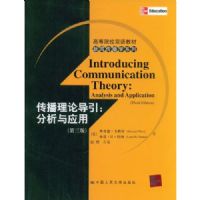
《传播理论导引:分析与应用(第3版)》对传播理论在我们生活中的运用做了实用、有趣且具有针对性的探索。全书以大量实际和具有应用性的案例把抽象理论转化为易于学习者接受的,并能应用于实际生活的知识,很好地祛除了理论的神秘感,帮助学习者更系统地掌握传播理论。《传播理论导引:分析与应用(第3版)》有助于学习者加深对传播学领域原理、核心概念及重要理论的印象和理解,对不具备传播学理论背景的初学者也大有裨益。
理查德·韦斯特(Richard West) 波特兰南缅因州大学(university of Southern Maine in Portland)传播系教授。他在伊利诺伊州立大学获得学士和硕士学位,在俄亥俄大学获博士学位。理查德从1984年开始任教,他的教学与研究兴趣从家庭多样性研究一直到师生传播研究。理查德曾获得过南缅因州大学许多教学研究奖,包括艺术与科学学院杰出教学奖以及传播学研究教师评议会奖。他还获得过伊利诺伊州立大学和俄亥俄大学杰出毕业生奖。他与林恩·H·特纳合作完成了((性别与传播》(Gender and Communication)、《家庭传播理论》(Perspectives on Family Communication)等著作。
林恩·H·特纳(Lynn H.Turner)威斯康星州密尔沃基市马凯特大学(Marquette University in Milwaukee,Wisconsin)传播研究室副教授。她在伊利诺伊一芝加哥大学获得学士学位,在艾奥瓦大学获硕士学位,在西北大学获博士学位。林恩1985年在马凯特开始教学工作,此前曾在艾奥瓦州立大学执教。她的研究兴趣包括家庭传播和性别与传播。她获得的奖项有马凯特大学传播学研究优秀奖,她与帕特里克·苏利文合著的《从边缘到中心》(From the Margins to the Center)获美国传播、语言和性别联合会年度最佳图书奖。
插图:

Basic Suppositions of CPM
As we have noted, CPM is concerned with explaining people's negotiation processes around disclosing private information. Our first task, then, is defining private information. Some researchers have stated that "what makes things private is in large part their importance to our conceptions of ourselves and to our relationships with others". Petronio commented that people define private information as information about things that matter deeply to them. Thus, the process of communicating private information in relationships with others becomes private disclosures. As we have stated previously, CPM focuses on private disclosures rather than self-disclosures.
The emphasis away from self-disclosure makes a distinction between CPM's definition of disclosure and that of traditional research on openness.CPM views the definition differently in three ways. First, private disclosure puts more emphasis on the personal content of the disclosure than does traditional self-disclosure literature. In doing this, CPM gives more credence to the substance of disclosures, or that which is considered private. Additionally,CPM examines how people disclose through a rule-based system. Finally, CPM does not consider that disclosures are only about the self. Disclosures are a communicative process. As Petronio observes, "to fully understand the depth and breadth of a disclosure, CPM does not restrict the process to only the self, but extends it to embrace multiple levels of disclosure including self and group. Consequently, CPM theory offers a privacy management system that identifies ways privacy boundaries are coordinated between and among individuals".
Communication Privacy Management Theory accomplishes this goal by proposing five basic suppositions: private information, private boundaries,control and ownership, rule-based management system, and management dialectics (see Figure 12.1). We
……