内容简介
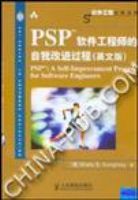
随着软件工程专业的发展和成熟,个体软件过程(PSP)得到了广泛认可和应用实践。本书系统描述了个体软件过程(PSP),并且解释了按可预测的进度交付优良产品的实践和方法。读者将会了解一个规范的软件工程过程所包括的具体内容。
本书通过14章分步介绍了PSP方法。第1章描述了PSP整体原理及介绍策略。第2章和第3章解释了如何遵循一个定义的过程和怎样收集和使用用于管理程序开发作业的数据。第4至第7章介绍了估算和计划。第8章至第12章阐述了质量管理和设计。第13章描述了如何将PSP方法用于各种工作。第14章描述如何将PSP方法用于TSP过程,以及TSP指导经过PSP训练的软件工程师怎样在一个项目中使用这些方法。
本书实用性与可读性较强,可作为高等学校计算机软件工程课程的教材,也可作为工程技术人员自学个体软件过程的教材,同时也是进行软件过程改善和能力成熟度模型SW-CMM评估的重要参考资料。此书作为SEI 的PSP Body of Knowledge(BOK)的学习指导教材,为掌握PSP知识体提供必要的帮助。本书还可供软件过程改进人员、软件开发项目经理、程序员阅读参考。
 目录
目录
Chapter 1 The Personal Process Strategy 1
1.1 The PSP's Purpose 3
1.2 The Logic for a Software Engineering Discipline 4
1.3 Using Disciplined Development Practices 6
1.4 Operational Processes 6
1.5 Defining and Using a Personal Process 7
1.6 Learning to Use a Personal Process 8
1.7 Preparing for the Team Software Process 9
1.8 Summary 9
Reference 10
Chapter 2 The Baseline Personal Process 11
2.1 What Is a Process? 12
2.2 Defining Your Own Process 13
2.3 Baseline Process Contents 14
2.4 Why Forms Are Helpful 16
2.5 The PSP Process Elements 17
2.6 The PSP0 Process 18
2.7 PSP0 Measures 20
2.8 Time Recording 21
2.9 Defect Recording 24
2.10 The PSP0 Project Plan Summary 30
2.11 The Compile Phase 31
2.12 Incremental Development 32
2.13 PSP Tool Support 34
2.14 Summary 34
2.15 Exercises 34
Chapter 3 Measuring Software Size 35
3.1 Size Measures 35
3.2 Establishing a Database Counting Standard 40
3.3 Establishing a Line-of-Code Counting Standard 40
3.4 Size Accounting 42
3.5 Using Size Data 45
3.6 Calculating Productivity 47
3.7 Size Counters 48
3.8 Other Size Measures 53
3.9 Summary 54
3.10 Exercises 54
References 55
Chapter 4 Planning 57
4.1 The Planning Process 58
4.2 Why Make Plans? 59
4.3 What Is a Plan? 60
4.4 The Contents of a Software Plan 60
4.5 Planning a Software Project 62
4.6 The Conceptual Design 63
4.7 Plan Quality 65
4.8 Planning Issues 65
4.9 Summary 66
Reference 67
Chapter 5 Software Estimating 69
5.1 Size Estimating Principles 69
5.2 The Conceptual Design 70
5.3 Proxy-Based Estimating 71
5.4 Using Proxies in Estimating 75
5.5 Producing the Relative-Size Table 78
5.6 Estimating Considerations 80
5.7 Summary 84
Chapter 6 The PROBE Estimating Method 85
6.1 Estimating from Data 85
6.2 Proxy-Based Estimating 87
6.3 Estimating with Limited Data 95
6.4 An Estimating Example 100
6.5 Estimating Nonprogramming Tasks 102
6.6 Considerations in Using PROBE 105
6.7 Summary 108
6.8 Exercises 108
Chapter 7 Software Planning 109
7.1 Plan Requirements 109
7.2 Project and Period Plans 111
7.3 Producing the Schedule 113
7.4 Making the Schedule 115
7.5 Earned Value 119
7.6 An Earned Value Example 120
7.7 Comments on the EV Example 123
7.8 Estimating Accuracy 125
7.9 The Prediction Interval 126
7.10 Alerting Management to Changes 128
7.11 Planning Considerations 129
7.12 Summary 131
7.13 Exercises 132
References 132
Chapter 8 Software Quality 133
8.1 The PSP Quality Strategy 135
8.2 What Is Software Quality? 135
8.3 The Economics of Software Quality 136
8.4 Defect Types 141
8.5 Personal Quality Practices 142
8.6 Quality Measures 143
8.7 Quality Management 153
8.8 Personal Quality Management 154
8.9 Managing Product Quality 156
8.10 PSP Improvement Practices 157
8.11 Defect Prevention 158
8.12 Summary 160
References 161
Chapter 9 Design and Code Reviews 163
9.1 What Are Reviews? 164
9.2 Why Review Programs? 164
9.3 Review Principles 168
9.4 The PSP Code Review Process 173
9.5 The Code Review Checklist 176
9.6 Design Reviews 181
9.7 Design Review Principles 183
9.8 Review Measures 187
9.9 Review Issues 194
9.10 Summary 201
9.11 Exercises 202
References 202
Chapter 10 Software Design 203
10.1 What Is Design? 204
10.2 Why Design? 206
10.3 The Design Process 207
10.4 Design Levels 210
10.5 Design and Development Strategies 216
10.6 Design Quality 220
10.7 Summary 223
References 224
Chapter 11 The PSP Design Templates 225
11.1 Design Representation 226
11.2 The Design Templates 229
11.3 The Operational Specification Template (OST) 230
11.4 The Functional Specification Template (FST) 233
11.5 The State Specification Template (SST) 236
11.6 The Logic Specification Template (LST) 240
11.7 A State-Machine Design Example 241
11.8 Using the PSP Design Templates 246
11.9 Using the Design Templates in Large-Scale Design 248
11.10 Summary 250
11.11 Exercises 250
References 250
Chapter 12 Design Verification 253
12.1 Why Verify Programs? 254
12.2 Design Standards 257
12.3 Execution-Table Verification 258
12.4 Trace-Table Verification 262
12.5 Verifying State Machines 265
12.6 Loop Verification 271
12.7 Other Analytical Verification Methods 277
12.8 Verification Considerations 280
12.9 Summary 284
12.10 Exercises 284
References 285
Chapter 13 Process Extensions 287
13.1 Customizing the Development Process 289
13.2 Why Define a Process? 290
13.3 The PSP Process Strategy 291
13.4 Defining a Process 291
13.5 Process Evolution 294
13.6 Example Processes 298
13.7 Process Development Considerations 306
13.8 Summary 307
13.9 Exercises 308
References 308
Chapter 14 Using the Personal Software Process 309
14.1 Development Challenges 309
14.2 The Team Software Process (TSP) 313
14.3 The Logic of the TSP 314
14.4 Teambuilding 314
14.5 The TSP Launch Process 316
14.6 The TSP Coach 317
14.7 Managing Your Own Project 318
14.8 TSP Results 322
14.9 The Rewards of Teamwork 322
14.10 The TSP Team of One 323
14.11 Your Future in Software Engineering 326
References 327
Index 329
APPENDIX